
What is Splunk?
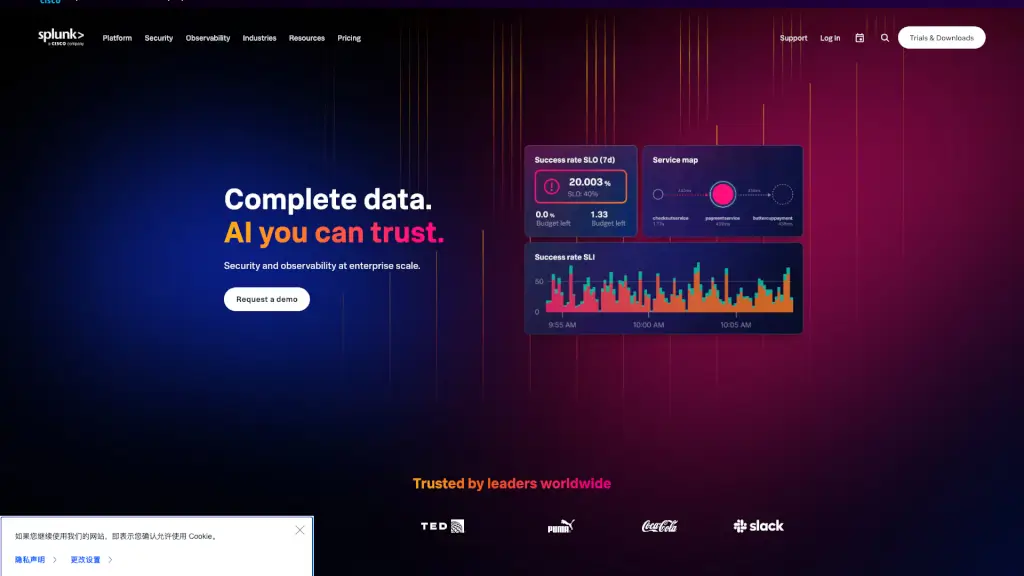
Splunk is a powerful unified security and observability platform that helps organizations stay resilient in today’s fast-moving digital world. By bringing together machine data from across your entire tech environment—servers, apps, networks, cloud services, and more—it gives teams real-time visibility to detect threats, troubleshoot issues, and prevent disruptions before they impact customers.
Originally known for its log analysis capabilities, Splunk has evolved into an AI-powered platform that supports both security operations (SecOps) and IT observability at enterprise scale. Whether you're a SOC analyst hunting advanced threats or an SRE optimizing application performance, Splunk provides a single source of truth backed by trusted data and contextual intelligence.
Now part of Cisco, Splunk continues to lead the industry—recognized as an 11-time Gartner Magic Quadrant Leader for SIEM and a 3-time Leader for Observability Platforms—helping global brands like Carrefour, Singapore Airlines, and Progressive Insurance respond faster, reduce downtime, and drive digital transformation with confidence.
What are the features of Splunk?
- Unified Data Platform: Ingest, index, and analyze petabytes of machine data from any source—logs, metrics, traces, network packets—with built-in support for OpenTelemetry.
- AI-Powered Security (Agentic SOC): Leverage AI and Cisco Talos threat intelligence to automate threat detection, investigation, and response—cutting response times by up to 3x.
- Observability with AIOps: Use Splunk IT Service Intelligence (ITSI) and AppDynamics to monitor service health, predict outages, and reduce alert noise across cloud and on-prem environments.
- Advanced Threat Detection: Combine UEBA, behavioral analytics, and risk scoring to uncover insider threats, lateral movement, and “living off the land” attacks.
- Compliance Automation: Streamline audits and reporting for standards like PCI DSS, HIPAA, and GDPR with pre-built content and real-time dashboards.
- 2000+ Integrations: Extend functionality via Splunkbase with apps for cloud platforms, SaaS tools, IoT devices, and operational technology (OT).
- Fraud & Financial Crime Prevention: Detect suspicious patterns in real time using customizable detection rules and cross-domain correlation.
What are the use cases of Splunk?
- Accelerate SOC productivity by automating repetitive tasks with SOAR and reducing manual investigations through AI-driven insights.
- Reduce mean time to resolution (MTTR) by 10x using end-to-end observability across microservices, third-party APIs, and backend systems.
- Ensure compliance with automated evidence collection and audit-ready reports for regulatory frameworks.
- Prevent revenue loss by detecting fraud in e-commerce or financial transactions before it escalates.
- Optimize cloud costs and performance by correlating infrastructure metrics with business KPIs to identify waste and bottlenecks.
- Improve customer experience by proactively identifying and fixing issues affecting end-user journeys—before users complain.
- Modernize legacy IT by unifying monitoring from disparate tools into a single pane of glass, cutting licensing costs by up to 30%.
How to use Splunk?
- Start with a free trial or product tour on Splunk’s website to explore core capabilities without commitment.
- Install Universal Forwarders or OpenTelemetry agents to begin streaming logs, metrics, and traces into your Splunk deployment.
- Use pre-built content packs from Splunkbase (like detection rules for SIEM or dashboards for AWS) to accelerate time-to-value.
- Enable AI features like Anomaly Detection or Attack Analyzer directly within Splunk Enterprise Security or Observability Cloud.
- Integrate with your ticketing system (e.g., ServiceNow) to auto-create incidents and reduce manual handoffs.
- Leverage Splunk Lantern or community forums to find best practices, troubleshooting tips, and user-contributed solutions.