
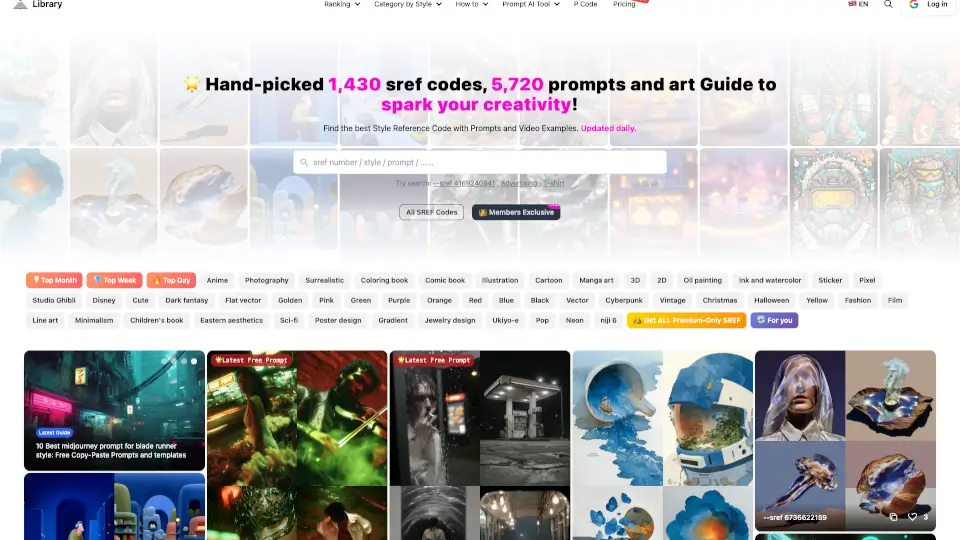
What is PromptSREF?
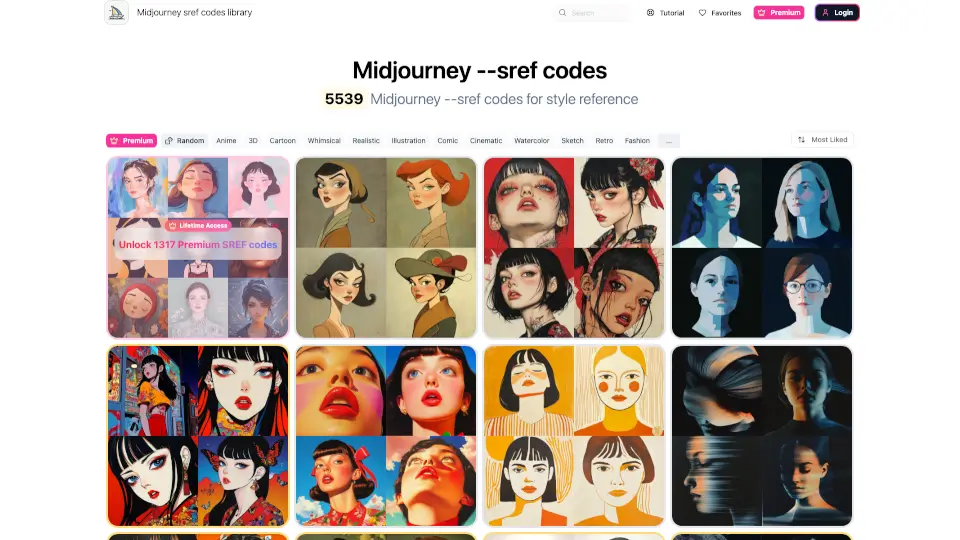
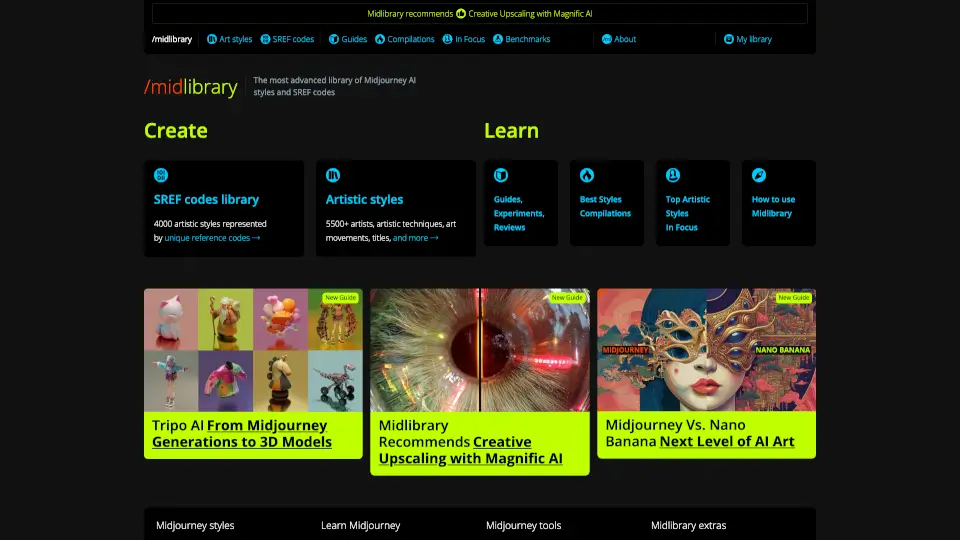
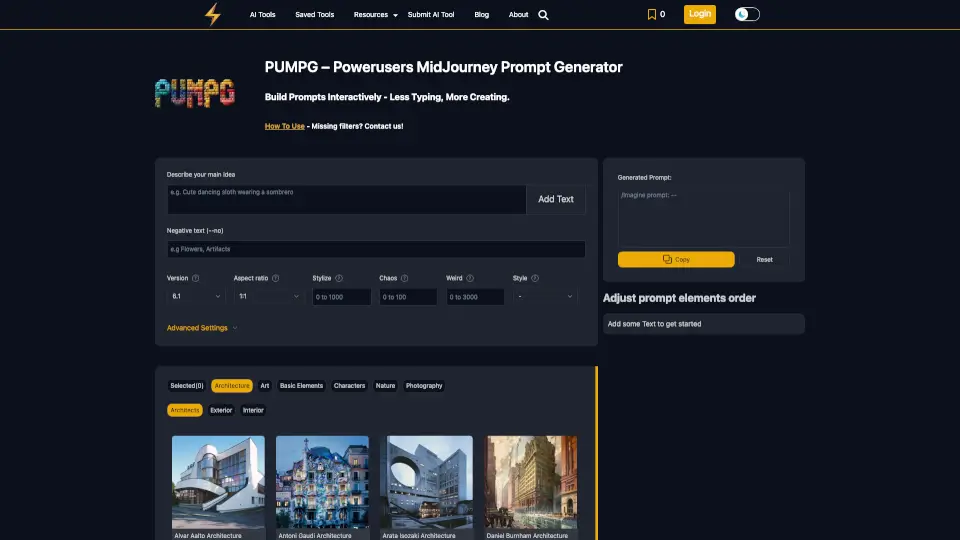
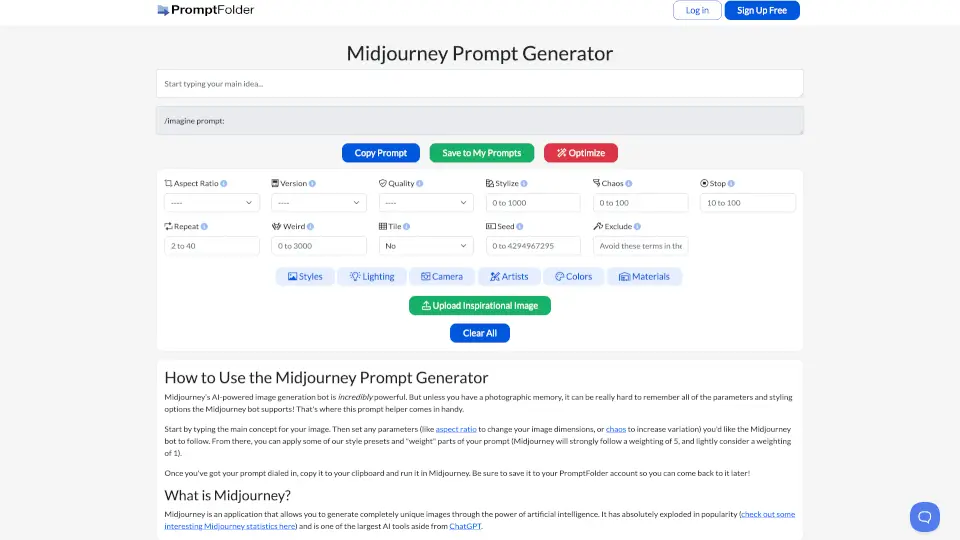
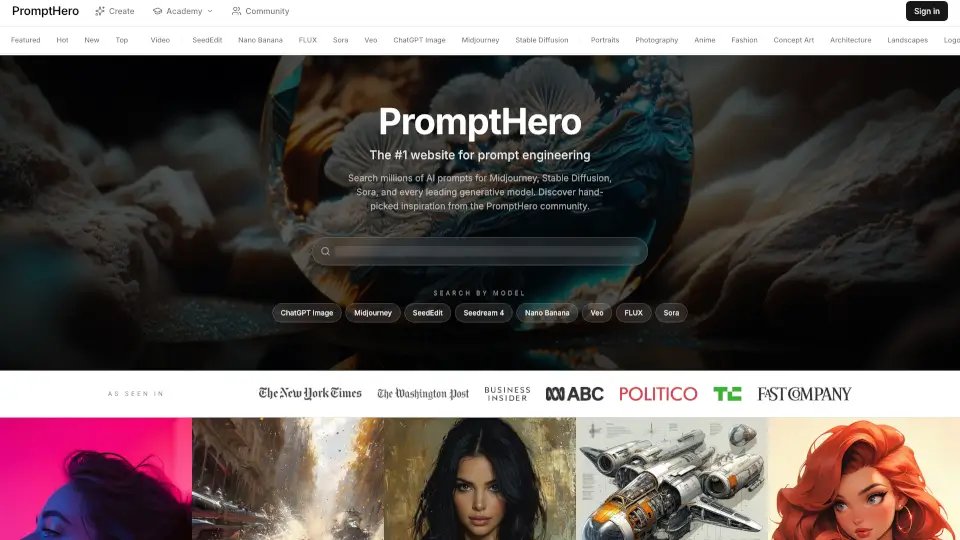
Promptsref is an AI prompt library and AI generation workspace for creators who want to skip the blank page and find visual inspiration faster. It collects curated images and videos alongside the prompts that produced them, so you can study the style, composition, lighting, and model-specific details before creating your own version. The platform supports multiple AI models — including GPT Image, Nano Banana, Seedance 2.0, and Midjourney — and offers tools for generating images, videos, voice, and motion effects in one place. It’s built for designers, marketers, video creators, and independent creators who need reliable references and quick variations without losing control over the output.
What are the features of PromptSREF?
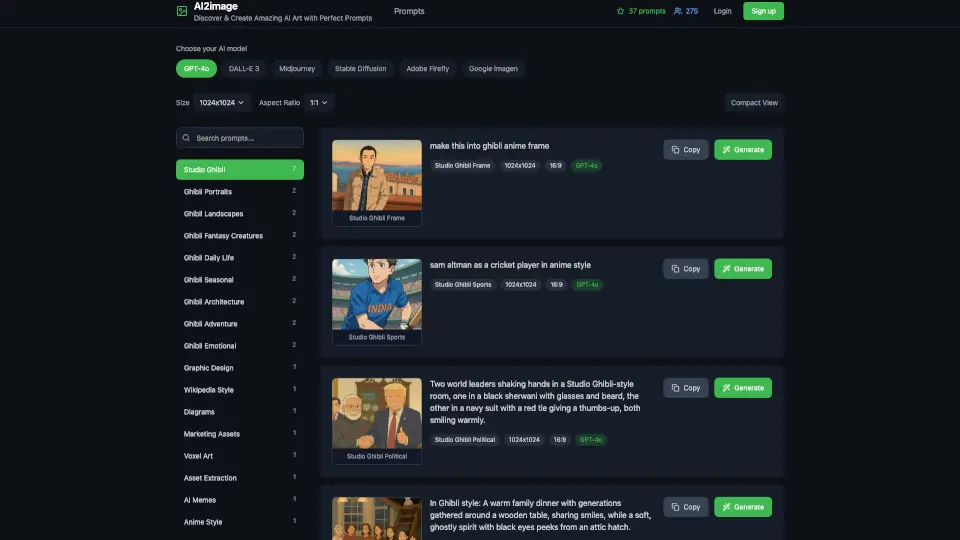
- Curated Prompt Library by Model: Browse thousands of public prompts organized by creative style (portrait, anime, illustration, 3D, wallpaper, character design) and specific AI models like GPT Image, Nano Banana, Seedance 2.0, and Midjourney. Each prompt is paired with its visual result, so you can learn what works.
- Multi-Model Generation Tools: Generate images, videos, and audio directly from the platform. Choose from 20+ models, adjust subject, ratio, style, and details, then create a new version without leaving the workflow.
- AI Image-to-Image and Video Effects: Tools like AI Image to Image Generator, AI Effect Templates, Video Motion Control, and Video Frame Extractor let you edit existing images or videos — change angles, remove backgrounds, split images into grids, or turn a grid into a video.
- Voice Generation and Cloning: Generate voice audio, clone voices, or design new voice profiles using the built-in Text to Speech, Voice Clone, and Voice Design tools.
- Visual Search and Reference Workflow: Instead of typing a prompt from scratch, you can search by style, image, video, or prompt text. Find a result you like, examine its prompt, and then modify it to test new directions with the generation tools.
What are the use cases of PromptSREF?
- Designer looking for style inspiration: Browse the prompt library by model (e.g., Midjourney) and style (e.g., illustration or 3D), then duplicate the prompt, tweak the subject, and generate a new image to match a brand brief.
- Video creator testing trending effects: Use AI Effect Templates and Video Motion Control to apply trending AI video effects to existing footage, then export the result for social media.
- Marketer creating product listings: Generate product listing images with the AI Product Listing Image Generator, then upscale to 4K with the Upscale Image AI tool for e-commerce use.
- Independent creator building a consistent character set: Use the library’s character design prompts, adjust the character description, and generate multiple images of the same AI character in different poses or scenes.
- Student learning prompt engineering: Study the prompts behind top-rated images, compare how different models (e.g., GPT Image vs. Nano Banana) handle the same concept, and practice writing your own prompts with the Image to Prompt Generator.
- Content team repurposing assets: Take a single image, split it into a grid with Split Image Into Grid, then use Turn Grid to Video to create a short looping video for social posts.
How to use PromptSREF?
- Start by visiting the Promptsref homepage and browsing the Prompt Library — use the filter by model (e.g., Seedance 2.0) or style (e.g., Photography) to find a visual example that matches your idea.
- Click on any prompt card to see the full prompt text, the model used, and the generated image or video. Study the structure of the prompt, including the subject, style, lighting, and composition details.
- To create your own version, open the generation tool (e.g., AI Image Generator or Multi-Model AI Video Generator), paste the base prompt, then modify the subject, ratio, style, or model before generating.
- After generation, use the Edit tools — such as Crop & Remove Background, Upscale Image AI 4K, or Change Camera Angle — to refine the output.
- For voice or motion projects, select the Voice or Motion Control tools, upload your source file or describe the desired effect, and adjust settings before rendering.