
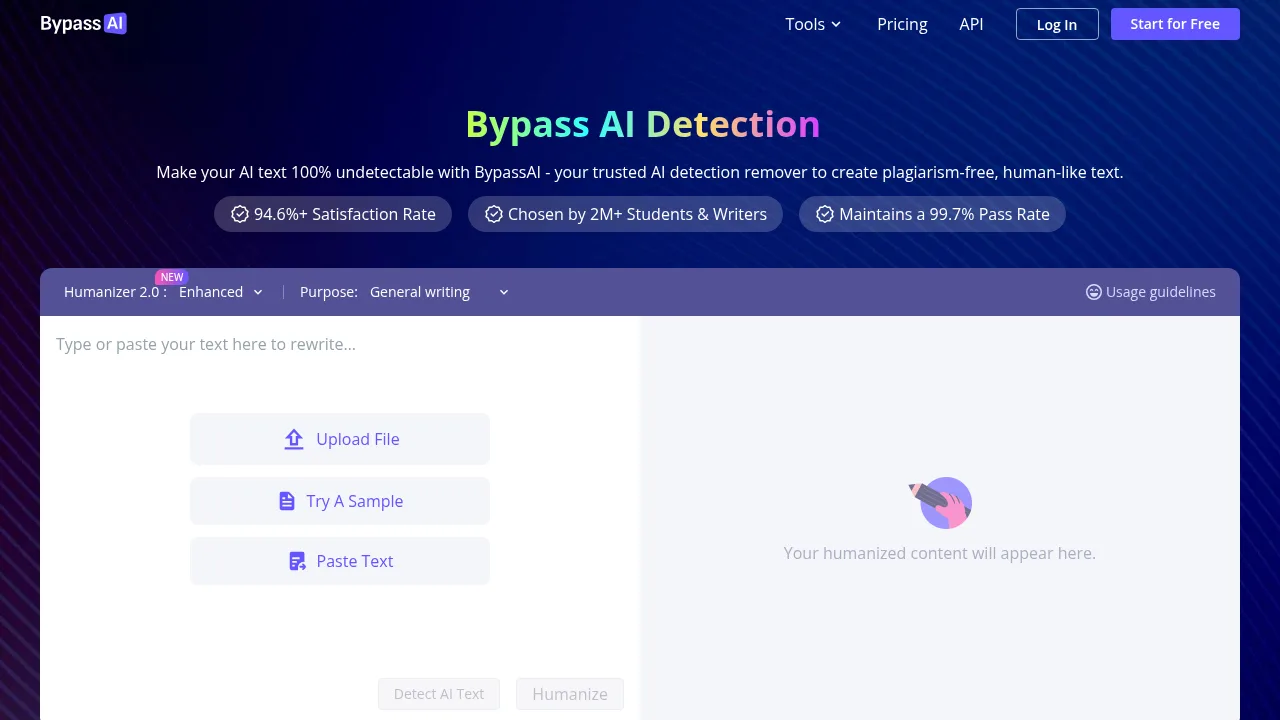
What is Bypass AI?
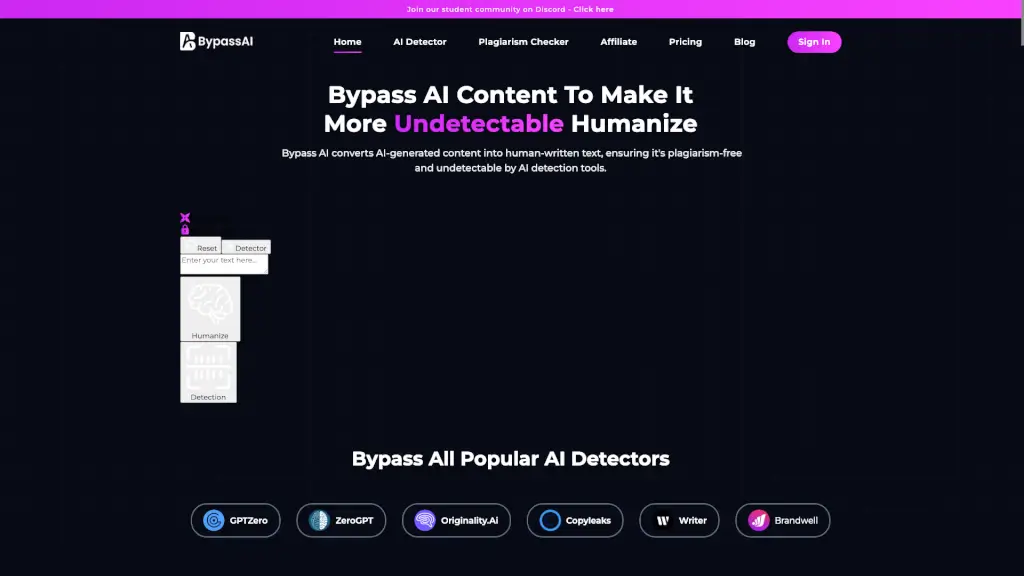
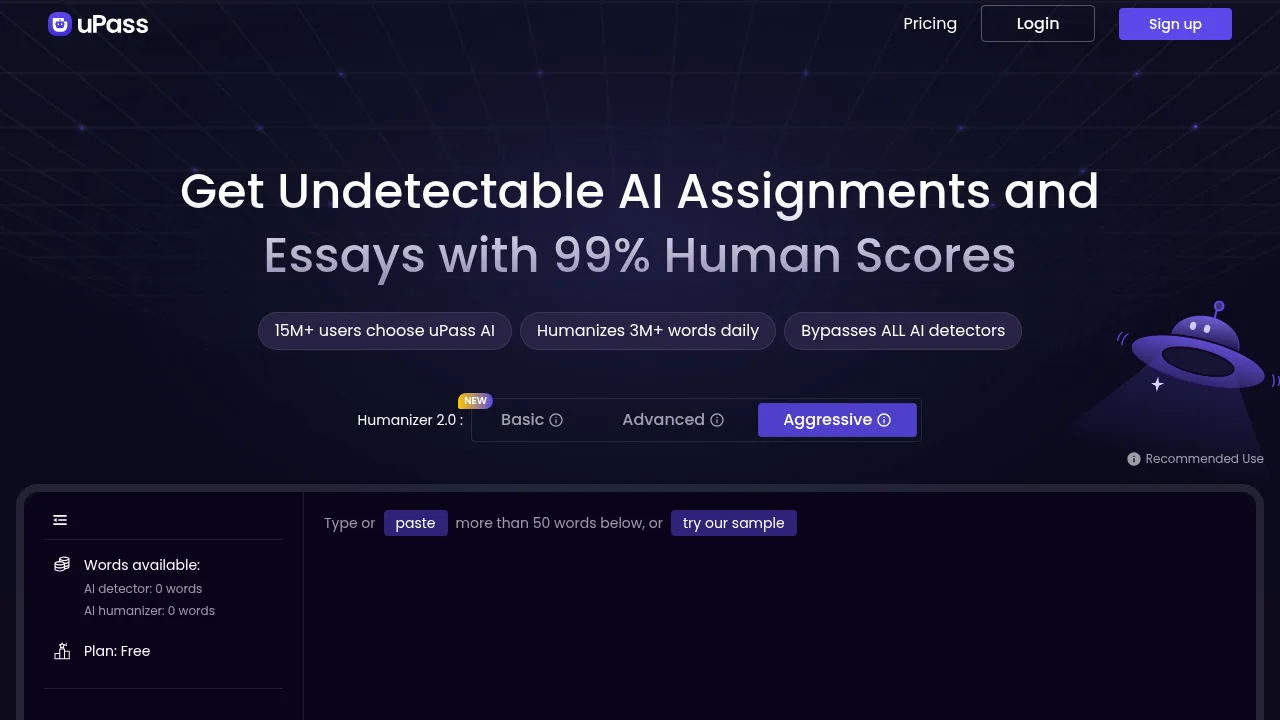
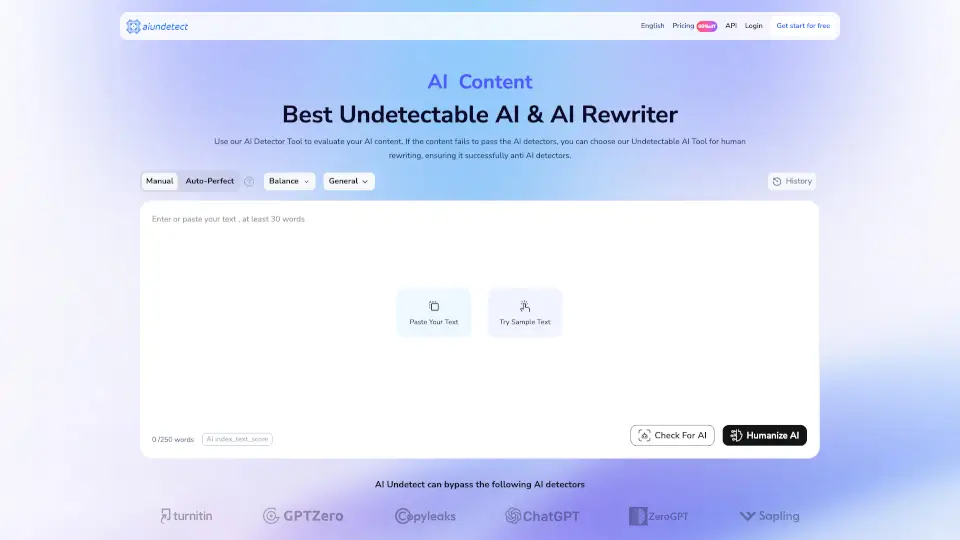
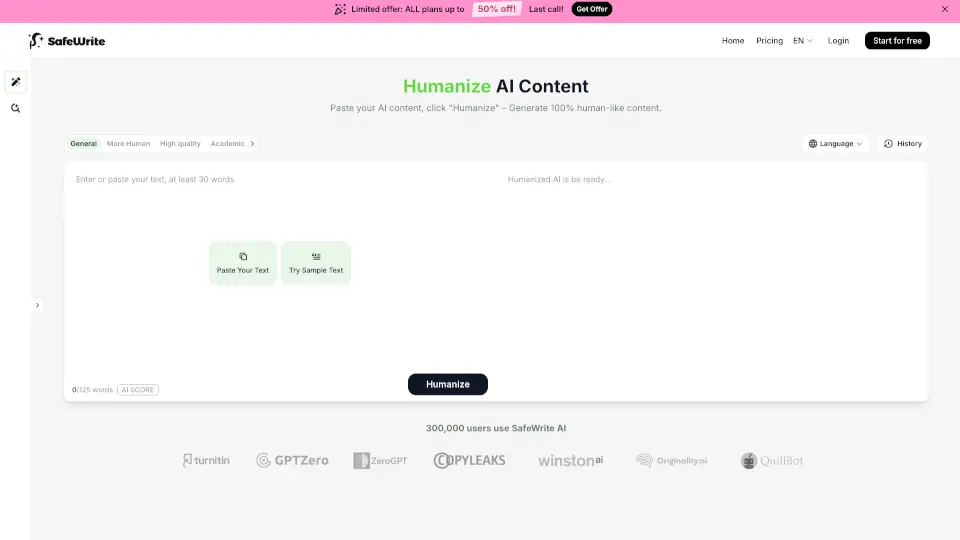
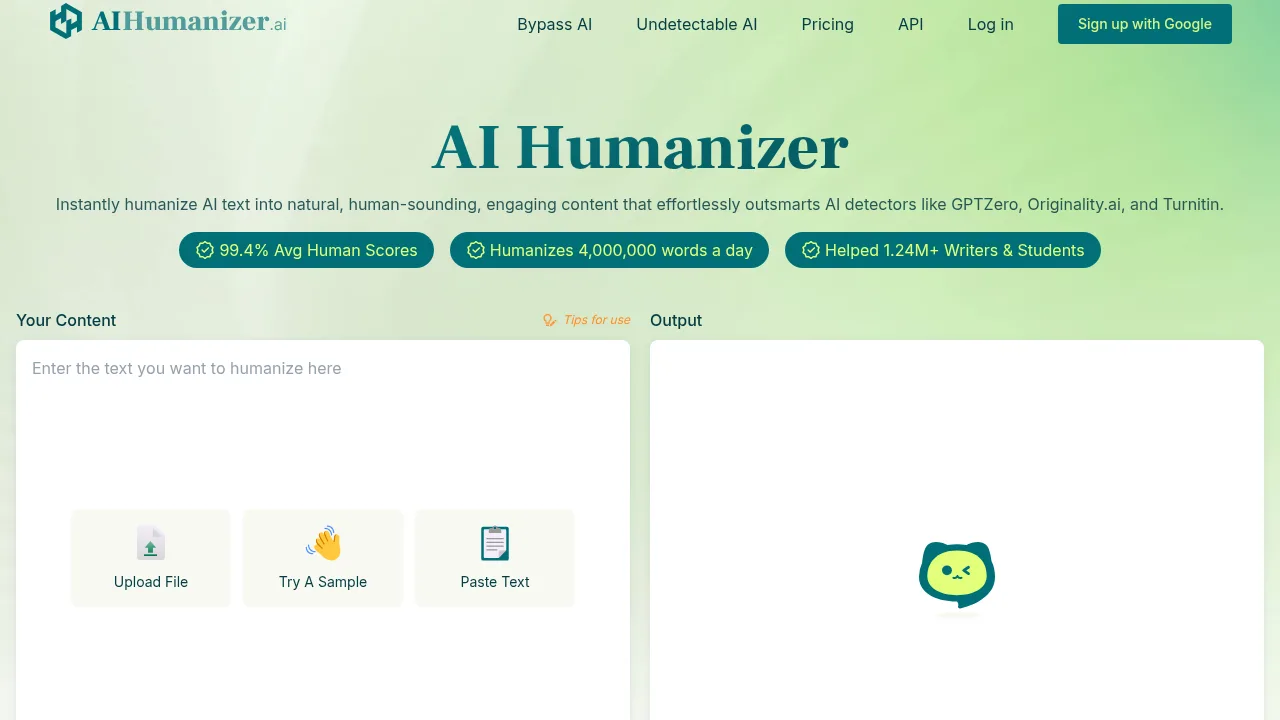
Bypass AI is a web-based tool that rewrites AI-generated text to avoid detection by platforms such as GPTZero, Turnitin, and Originality.ai. It accepts pasted text or uploaded files and outputs rewritten content intended to pass both AI detectors and plagiarism checks. New users receive a free word allowance, with paid plans required for additional capacity.
What are the features of Bypass AI?
- AI text rewritingTransforms input text into output designed to avoid detection by tools including GPTZero, Originality.ai, ZeroGPT, Turnitin, Winston AI, Content at Scale, and Copyleaks.
- Multilingual processingSupports humanization of AI-generated text in over 30 languages, including Arabic, Chinese, French, German, Japanese, Spanish, and Turkish.
- File uploadAccepts document files as an alternative to pasting text directly into the interface.
- Plagiarism avoidanceProduces rewritten text that the vendor claims passes plagiarism checks without copied or duplicated content.
- API accessProvides an API for programmatic integration of the rewriting service.
What are the use cases of Bypass AI?
- Academic submissionsStudents use the tool to rewrite AI-assisted coursework so it avoids flags from institutional AI detectors and plagiarism checkers.
- Publishing workflowsBloggers and journalists process AI-drafted articles to prevent platform or search engine penalties targeting automated content.
- Marketing copy distributionSocial media managers rewrite AI-generated promotional text to reduce the likelihood of triggering spam filters.
How to use Bypass AI?
- Provide input textType, paste, or upload AI-generated content into the web interface.
- Start processingSelect the action to transform the content.
- Retrieve outputReview the rewritten text displayed in the interface.
Bypass AI Pricing Information:
- Free new user accessIncludes a limited number of free words for new accounts; specific word count is not stated.
- Paid plansSubscription required to unlock additional words and features; prices and quotas are not specified in the source.