
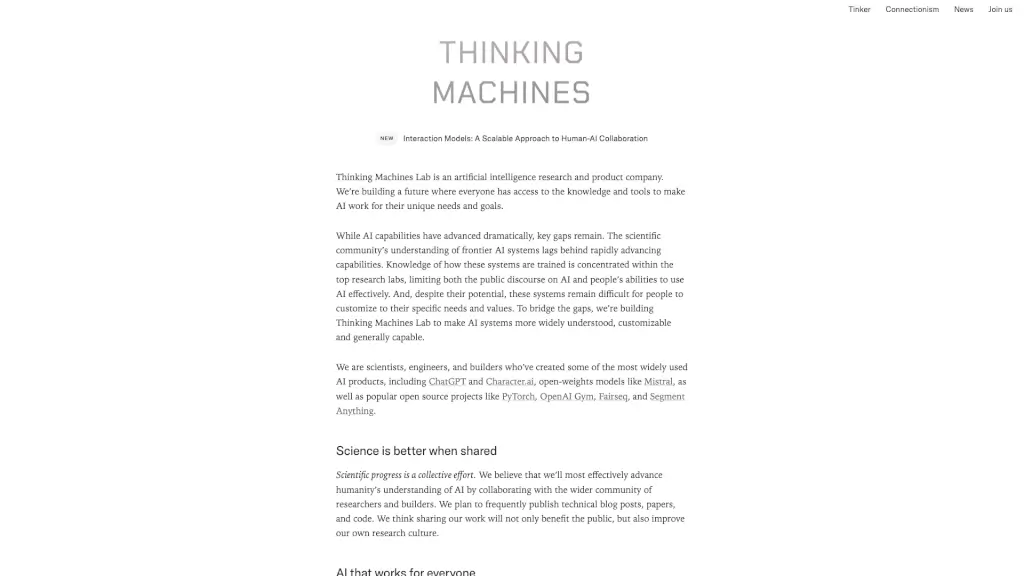
Что такое Thinking Machines Data Science?
Thinking Machines Lab — это исследовательская лаборатория и компания, которая создаёт доступные, настраиваемые и мощные ИИ-системы, ориентированные на реальное сотрудничество с людьми. Вместо того чтобы стремиться к полностью автономным ИИ, команда фокусируется на том, как сделать искусственный интеллект гибким помощником для специалистов в самых разных областях — от науки до творчества.
Лаборатория объединяет опыт учёных и инженеров, стоявших у истоков таких проектов, как ChatGPT, Character.ai, PyTorch и Mistral. Их цель — не просто строить умные модели, а делать их понятными, безопасными и полезными для как можно большего числа людей по всему миру.
Какие особенности у Thinking Machines Data Science?
- Человеко-центрированное взаимодействие: ИИ разрабатывается как партнёр, а не замена человеку — системы адаптируются под ваши цели и ценности.
- Мультимодальные возможности: Поддержка текста, изображений и других форматов для более естественного общения и лучшего понимания контекста.
- Открытость и совместная разработка: Регулярные публикации кода, статей и моделей (включая open-weights) для развития сообщества.
- Передовые модели ИИ: Создание интеллектуальных систем на переднем крае возможностей, особенно в науке и программировании.
- Надёжная инфраструктура: Высококачественная техническая база, обеспечивающая продуктивность, безопасность и масштабируемость.
- Эмпирический подход к безопасности: Комбинация проактивных исследований, red-teaming и мониторинга после запуска для предотвращения злоупотреблений.
Какие случаи использования Thinking Machines Data Science?
- Учёный использует ИИ для анализа сложных данных и генерации гипотез в биологии или физике.
- Программист настраивает персонализированного ассистента для помощи в написании, тестировании и документировании кода.
- Дизайнер взаимодействует с мультимодальной моделью, чтобы быстро превращать наброски в готовые макеты.
- Предприниматель создаёт собственного ИИ-помощника под нужды своего бизнеса — от клиентской поддержки до аналитики.
- Преподаватель адаптирует ИИ под учебную программу, чтобы объяснять сложные темы простым языком.
- Исследователь участвует в открытых проектах Thinking Machines Lab, улучшая модели и делясь результатами.
Как использовать Thinking Machines Data Science?
- Следите за обновлениями в X (Twitter) через аккаунт @thinkymachines.
- Изучайте технические блоги, код и модели, которые лаборатория публикует открыто.
- Ознакомьтесь с открытыми вакансиями, если хотите присоединиться к команде.
- Используйте open-weights модели (например, на базе Mistral) для собственных экспериментов и продуктов.
- Применяйте рекомендации по безопасности при внедрении ИИ в реальные проекты.
- Участвуйте в сообществе: тестируйте, давайте обратную связь, делитесь своими настройками.