
What is Lexmount?
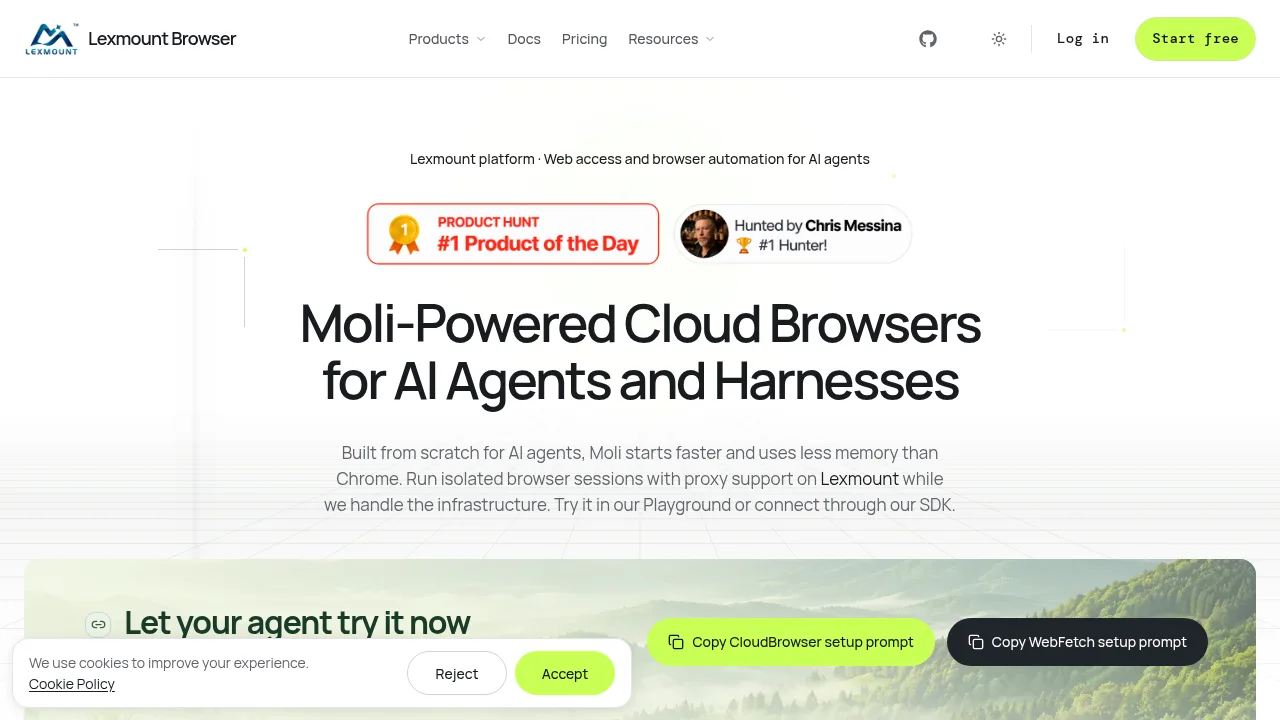
Lexmount provides web access and browser automation APIs designed for AI agents. It offers a managed cloud service running isolated browser sessions with proxy support, alongside tools to fetch structured page content and search the web. Access is available through an SDK, API integration, or a web-based Playground.
What are the features of Lexmount?
- Cloud browser controlRuns isolated browser sessions via code using either the Moli engine or Chromium, with configurable proxies.
- Page content extraction (Web Fetch)Converts a URL into structured, readable page content.
- Web searchTakes a query as input and returns ranked links to relevant pages.
- Task delegation (Agent)Accepts a task description and executes it to return a result.
- Dual browser enginesOffers Moli for structure-first tasks like DOM and text extraction, or Chromium for persistent contexts, extensions, and visual fidelity.
- Session observabilityProvides live views, dashboards, network snapshots, and logs to inspect running sessions.
What are the use cases of Lexmount?
- Documentation retrieval workflowSearches for documentation, fetches structured content from the resulting URLs, and interacts with the page.
- Article summarization by an agentInstructs an installed agent skill to read a specific URL and summarize the article.
How to use Lexmount?
- Open the PlaygroundAccess the web-based Playground to explore a task online; it starts with the Moli engine by default.
- Select an engineChoose Moli for structure-first tasks or Chromium for persistent contexts and extension support.
- Configure routingSet up an official or custom proxy if required for the target site.
- Run the taskExecute your web search, fetch, or browser interaction within the session.
- Inspect resultsUse the dashboard, live view, or logs to review execution evidence.
Lexmount Pricing Information:
- Free allowanceEach project receives a free allowance to run real tasks before choosing a paid plan.
- Paid plansSpecific prices are not stated; users select a plan based on expected task volume and required concurrency after validating costs with representative tasks.