
Ansible logo

Ansible

5.0
(0 Reviews)
United States17.37%

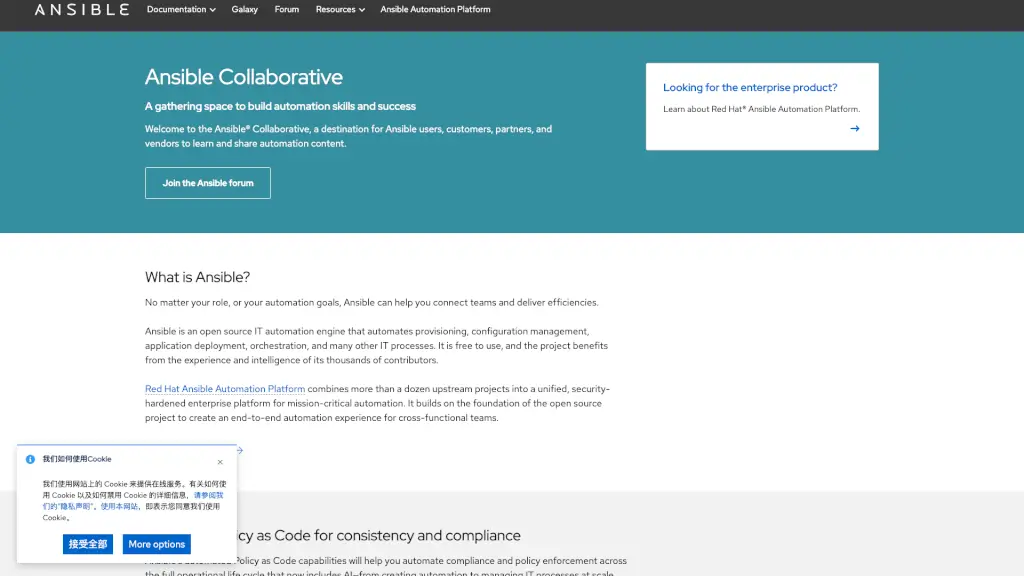
Ansible is an open-source automation engine that simplifies IT workflows through agentless, playbook-driven automation for configuration management, deployment, and orchestration.

Verified by SeekTool
Ansible

Ansible Product Information

What is Ansible?

Ansible is a powerful, open-source IT automation engine that helps teams streamline everything from server setup to application deployment—without complex coding or agents. Whether you're a developer, sysadmin, or DevOps engineer, Ansible lets you automate repetitive tasks using simple, human-readable YAML files called playbooks.

Built for collaboration and scalability, Ansible connects people and processes across hybrid and multi-cloud environments. The Red Hat Ansible Automation Platform extends this foundation with enterprise-grade security, support, and advanced features like event-driven automation and generative AI integration—making it ideal for mission-critical operations.

What are the features of Ansible?

  • Agentless Architecture: No need to install software on target machines—Ansible uses SSH (Linux) or WinRM (Windows) for secure, lightweight communication.
  • Playbook-Driven Automation: Define infrastructure and workflows as code using intuitive YAML playbooks that are easy to read, version-control, and share.
  • Policy as Code: Enforce compliance and security standards automatically across your entire IT lifecycle—from provisioning to decommissioning.
  • Ansible Galaxy Integration: Access thousands of pre-built roles and collections (like kubernetes.core or community.vmware) to accelerate automation development.
  • Event-Driven Automation: React instantly to system events (like alerts or log entries) using rulebooks, enabling real-time, autonomous responses.
  • Unified Enterprise Platform: Red Hat Ansible Automation Platform bundles upstream projects into a supported, hardened solution with tools like automation controller and ansible-navigator.

What are the use cases of Ansible?

  • Automating cloud infrastructure provisioning across AWS, Azure, and Google Cloud
  • Enforcing security policies consistently across hundreds of servers using Policy as Code
  • Deploying and managing Kubernetes clusters and applications at scale
  • Orchestrating complex multi-step workflows for application rollouts or disaster recovery
  • Managing VMware vSphere environments—including VMs, datacenters, and clusters—through code
  • Building middleware stacks (like Kafka or WildFly) reliably in multi-cloud setups

How to use Ansible?

  • Start by installing Ansible on a control node (your laptop or server) via package manager or pip
  • Create an inventory file listing the hosts you want to manage
  • Write your first playbook using YAML to define tasks (e.g., install packages, start services)
  • Test your automation locally using ansible-navigator or run it directly with the ansible-playbook command
  • Explore and reuse content from Ansible Galaxy to avoid reinventing the wheel
  • For enterprise use, deploy Red Hat Ansible Automation Platform to gain centralized control, RBAC, and audit logging

Do you like this tool?

Upvote to help others discover it!

Ansible Alternatives

ManageEngine Applications Manager

ManageEngine Applications Manager

ManageEngine delivers enterprise-grade IT operations, cybersecurity, and service management software with AI-powered insights, unified control, and proven ROI.

US
33.27%
3.2M
5.0
Atera

Atera

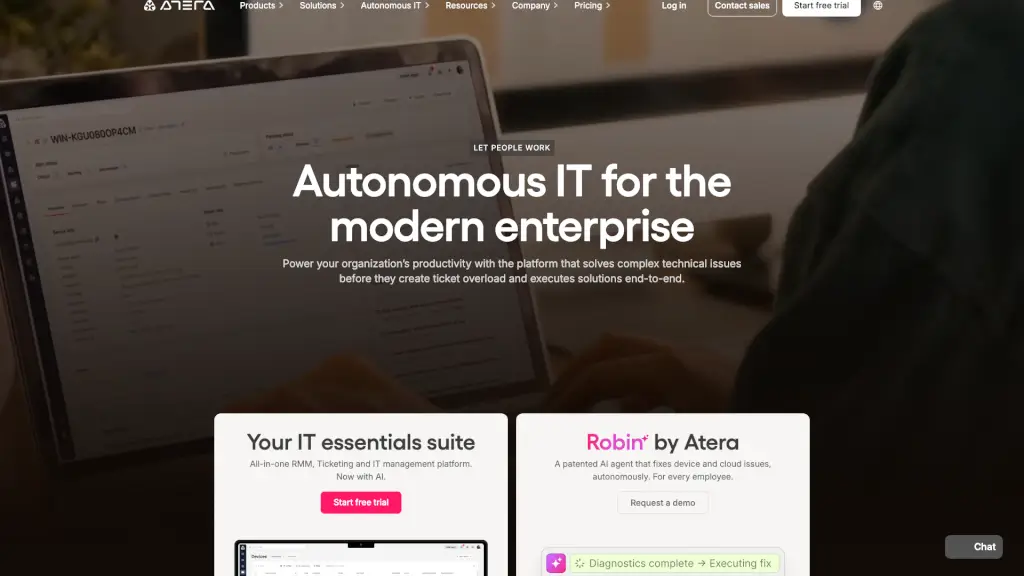
Atera is a full-stack IT management platform powered by autonomous AI agents that resolve technical issues end-to-end, reduce ticket volume, and empower IT teams to work proactively.

US
37.75%
1.2M
5.0

Ansible Related Other Categories

Ansible Traffic Analysis

💡 Insights

Medium Scale
100K-1M monthly visits. Growing tool with active development.
⚠️
Slight Decline
Traffic has slightly decreased recently.
👍
Good Experience
Bounce rate of 46%. Users are willing to explore features.
🌐
Global Reach
Balanced user distribution worldwide.
  • Monthly Visits

    509.02K

  • Bounce Rate

    46.14%

  • Pages Per Visit

    2.82

  • Visit Duration

    00:02:11

  • Global Rank

    100888

  • Country Rank

    121779

Visits Over Time

Traffic Sources

SearchOrganic55.84%
Direct21.81%
Referrals14.42%
SocialOrganic5.49%
GenAi1.53%
Mail0.83%
SearchPaid0.07%
DisplayAds0.01%
SocialPaid0.00%
Affiliate0.00%

Top Keywords

1
ansible
CPC$2.41
19.63KTraffic
2
ansible galaxy
CPC$2.25
2.15KTraffic
3
ansible documentation
CPC$0.51
1.48KTraffic
4
ansible modules
1.14KTraffic
5
ansible.builtin.copy
950Traffic

Top Regions

RegionPercentage
United States
United States
17.37%
Germany
Germany
10.61%
France
France
9.31%
Russia
Russia
6.46%
India
India
3.28%
Low
High

Powered by SimilarWeb

Ansible FAQ

What is Ansible?

Ansible is an open source IT automation engine that automates provisioning, configuration management, application deployment, orchestration, and other IT processes—using simple, agentless automation.

How does Ansible work?

Ansible works by connecting to your systems over SSH or WinRM and pushing small programs called “modules” to execute tasks. These tasks are defined in human-readable playbooks written in YAML.

What’s the difference between Ansible and Red Hat Ansible Automation Platform?

Ansible is the free, open-source project. Red Hat Ansible Automation Platform builds on it with enterprise features like enhanced security, technical support, event-driven automation, generative AI tools, and a unified user interface.

Where can I find pre-built automation content?

Visit Ansible Galaxy to discover and download ready-to-use roles and collections—such as middleware_automation, kubernetes.core, and community.vmware.

Can Ansible help with compliance and policy enforcement?

Yes! Ansible’s Policy as Code capabilities let you automate compliance checks and enforce security policies consistently across your entire infrastructure.

How do I get started learning Ansible?

Begin with the official documentation: try interactive labs, write your first playbook, explore inventory management, and experiment with tools like ansible-builder and ansible-navigator.

Is there a community for Ansible users?

Absolutely! Join the Ansible Collaborative—a forum where users, partners, and experts share knowledge, best practices, and automation content.

Ansible Reviews

0

0

0 Reviews
Sign Into leave a review

Recent Reviews

No reviews yet

Ansible Embed

Use website badges to drive community support for SeekTool.ai. They are easy to embed in your homepage or footer.

Light
Dark
Ansible - Featured on SeekTool.aiAnsible - Featured on SeekTool.ai
How to install?

Category Rankings

Ranked by monthly traffic