
What is Open Knowledge Maps?
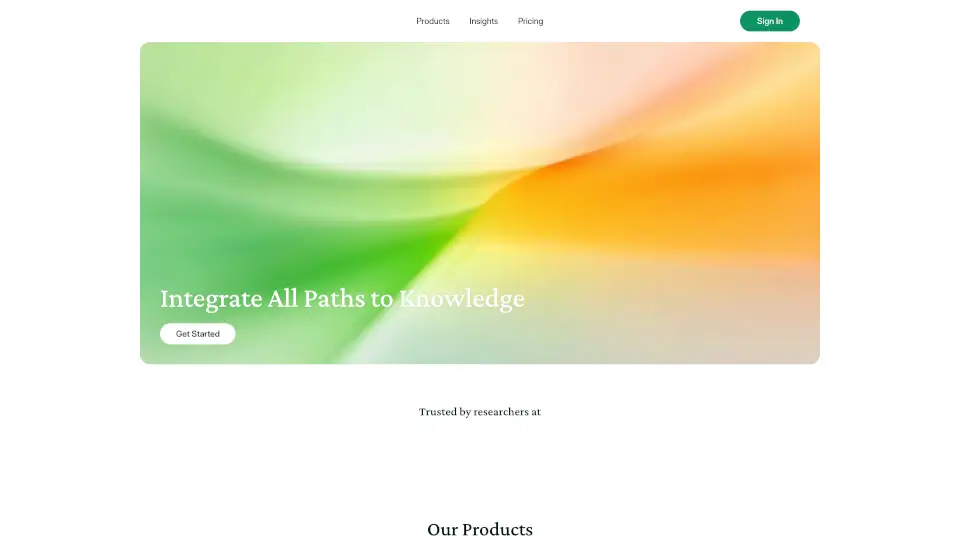
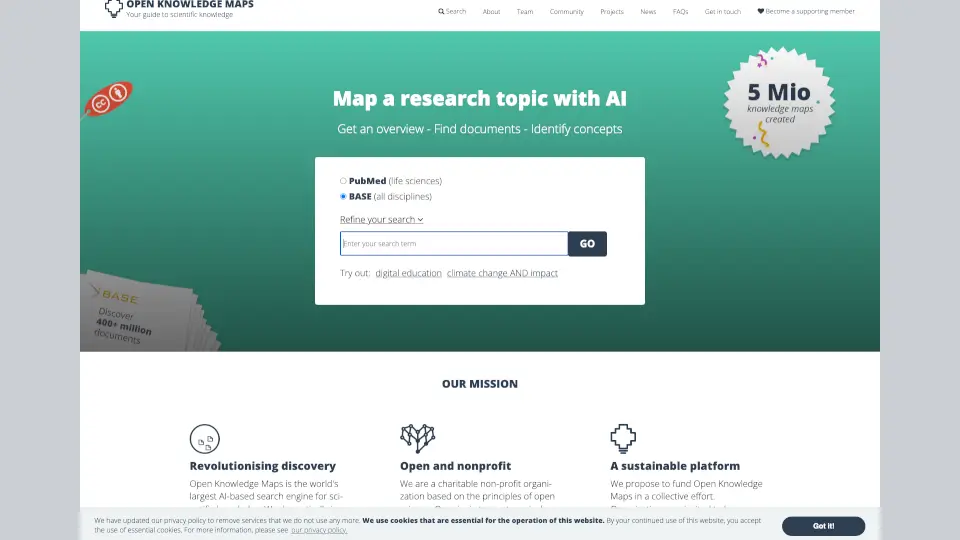
Open Knowledge Maps is your go-to guide for exploring scientific knowledge. This innovative, AI-based search engine helps you visualize research topics, find relevant papers, and identify key concepts. Whether you're a student, researcher, or just curious, OKM makes discovering scientific information easier and more intuitive.
What are the features of Open Knowledge Maps?
- Visual Research Overviews: Get a clear, visual map of any research topic to understand the big picture.
- Smart Document Search: Quickly find relevant papers and documents across various disciplines using PubMed or BASE.
- Concept Identification: Automatically identify important concepts and themes within your research topic.
- Customizable Search: Filter results by time range, document type, and metadata quality to refine your search.
- Nonprofit & Open Science: As a charitable organization, OKM promotes open science and equitable access to knowledge.
- Sustainable Platform: Supported by a community of users and organizations, ensuring long-term accessibility.
- Custom Integrations: Integrate OKM tools into your own systems for enhanced discovery capabilities.
What are the use cases of Open Knowledge Maps?
- Students starting a research project and needing to understand the topic landscape.
- Researchers looking for a quick overview of a new field or identifying gaps in existing studies.
- Educators preparing lectures or curriculum materials on complex scientific topics.
- Anyone exploring interdisciplinary topics and wanting to see connections between ideas.
How to use Open Knowledge Maps?
- Visit the Open Knowledge Maps website.
- Type your research topic or question into the search bar.
- Use filters to refine your search by time, document type, and metadata quality.
- Explore the visual map to identify key concepts and clusters.
- Click on documents to access relevant papers and further reading.