
What is Lemonade?
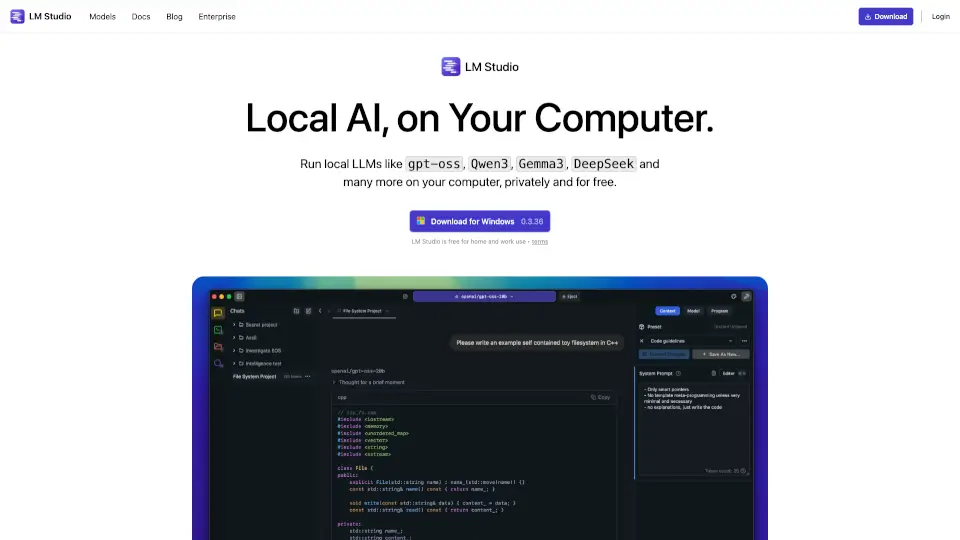
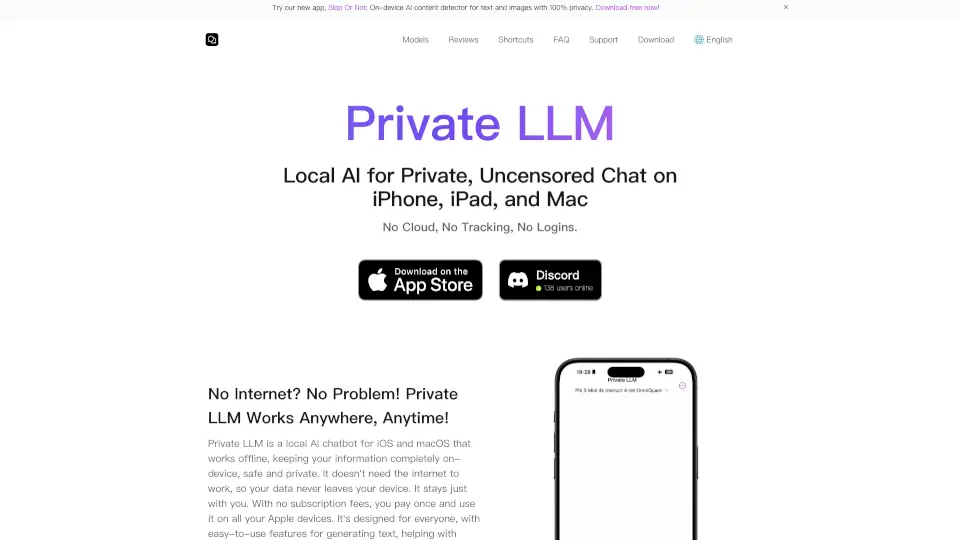
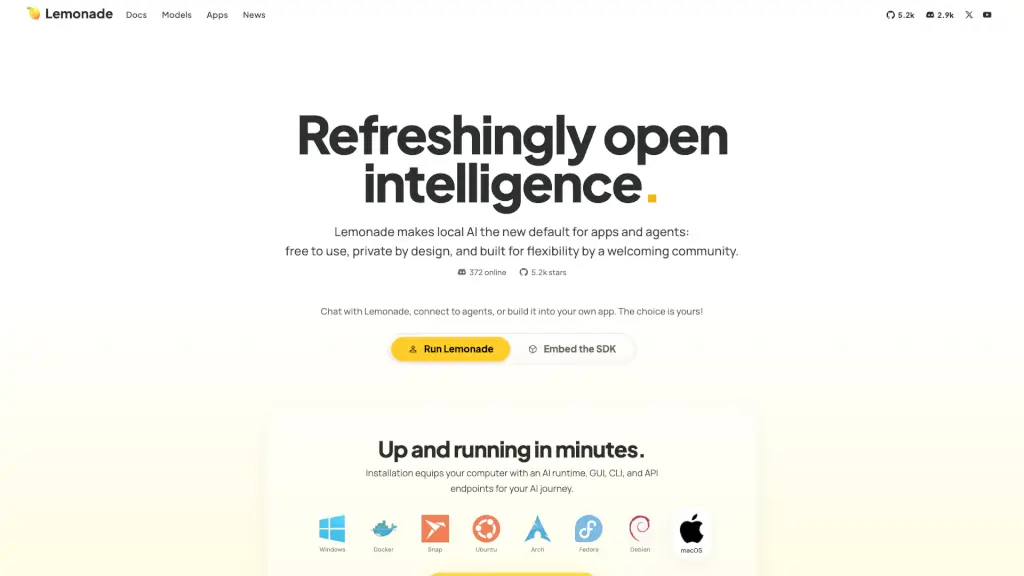
Lemonade is a local AI runtime for text, images, and speech that runs entirely on your own hardware. It’s free, private by design, and built for developers, hobbyists, and teams who want to use AI without sending data to the cloud. The tool includes a GUI, CLI, API endpoints, and an embeddable SDK so you can chat, generate images, transcribe audio, write code, and run embedding models—all offline. Lemonade is especially useful for anyone who needs to keep data on-device (zero telemetry, no upsell) and wants to control which models and inference backends they use, from llama.cpp to custom engines.
What are the features of Lemonade?
- Omni‑Modal Chat & Generation: One interface handles chat, vision, image generation, coding, and speech. You can upload an image, ask a question, generate a picture, or transcribe audio in the same session.
- Local‑First with Cloud Routing: By default everything runs on your machine, but Lemonade can intelligently route requests to servers or cloud APIs when needed, making it a scalable platform for apps and agents.
- Embeddable SDK: Developers can embed a copy of Lemonade directly into their own application, giving their app native local AI capabilities without requiring users to install a separate runtime.
- Wide Model Support: Pull models from the Lemonade registry, search on Hugging Face, or import your own. It supports GGUF format for llama.cpp and works with multiple inference engines.
- Cross‑Platform Installation: Lemonade runs on Windows, Docker, Snap, Ubuntu, Arch, Fedora, Debian, and macOS (with a .pkg installer). It also integrates with popular apps like Open WebUI, n8n, AnythingLLM, GAIA, and Claude Code via the OpenAI API standard.
- Built‑In Benchmarking & CLI Tools: The
lemonade benchcommand includes image‑generation benchmark mode, and the CLI lets you launch coding agents, chat REPL, manage models, and self-host a local server. - Community‑Driven Roadmap: Features like Auto‑Tune, Cross‑Vendor Support, Cloud Hybrid, Remote Use, GUI App, Enterprise Grade, and Omni Models are steered by open working groups on Discord.
What are the use cases of Lemonade?
- Developer building a local coding agent: Use Lemonade’s CLI to launch a coding agent that runs Qwen‑Coder‑Next on a machine with 128 GB unified RAM, enabling advanced tool use without leaving your local environment.
- Privacy‑conscious user who needs chat, image generation, and speech: Run Lemonade on a laptop, talk to it via voice, generate images, and transcribe meetings—all fully offline with no data leaving the device.
- Team self‑hosting AI for internal apps: Deploy Lemonade as a LAN‑wide server, serve the whole household or office, and connect any OpenAI‑compatible app (like GitHub Copilot or PiDify) to it.
- Productivity power user testing models: Use the CLI to pull models from Hugging Face, benchmark performance with
lemonade bench, and compare backends like llama.cpp before integrating into a larger workflow. - App developer embedding local AI: Add the Lemonade SDK to a mobile or desktop app so that users can access chat, vision, and embeddings without an internet connection.
How to use Lemonade?
- Install Lemonade on your preferred platform: download the macOS .pkg, use Package Manager for Linux (Ubuntu, Arch, Fedora, Debian), or run the Docker image.
- Launch the GUI or open the CLI – both are included in the installation. The GUI gives you a chat interface with image, code, and speech support.
- Pull a model from the Lemonade registry or Hugging Face using the CLI command
lemonade pull <model-name>– or import your own GGUF files. - Start a chat session or use the REPL mode to interact with text, images, and speech. For API access, use the provided endpoints (compatible with OpenAI format).
- Connect third‑party apps by pointing them to the local Lemonade server (default port) – they will use your local AI just like they would call OpenAI.