
What is Databricks?
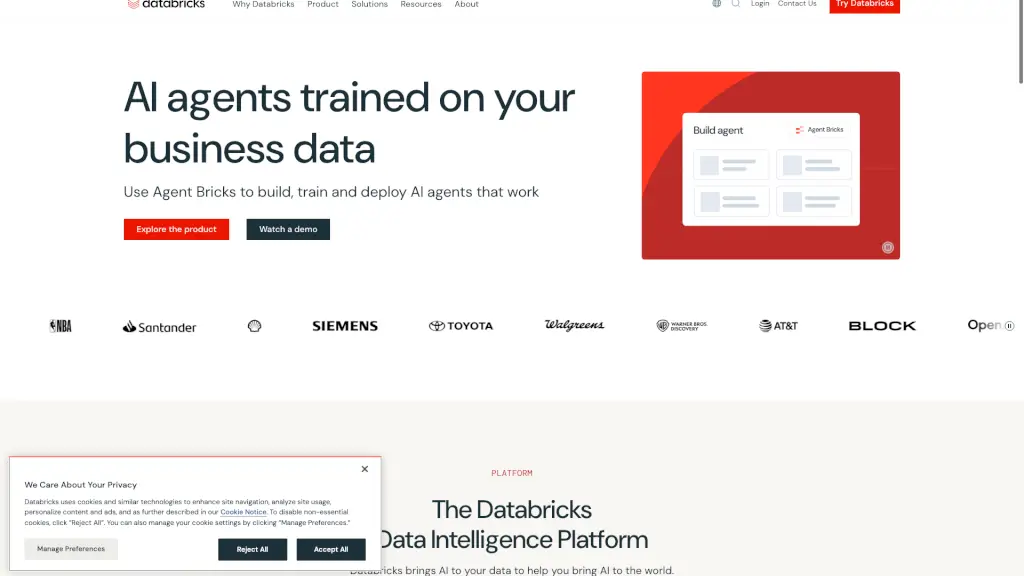
Databricks is a powerful and unified platform that brings together data, analytics, and AI to help businesses make the most of their data. It simplifies complex processes like ETL, data warehousing, and governance, making it easier for teams to build and deploy AI models. With Databricks, you can streamline your data workflows, ensure data privacy, and drive better business outcomes with a data-centric approach.
What are the features of Databricks?
- Unified Platform: A single, integrated environment for all your data, analytics, and AI needs, eliminating the need for multiple tools.
- Lakehouse Architecture: Combines the best of data lakes and data warehouses, offering high performance and flexibility with open formats.
- Governance: Unified governance for all data, analytics, and AI assets, ensuring compliance and control.
- Artificial Intelligence: Tools to build, train, and deploy machine learning and generative AI models, with automated experiment tracking and model monitoring.
- Business Intelligence: Intelligent analytics for real-world data, enabling everyone in your organization to discover insights using natural language.
- Data Sharing: Open, secure, and zero-copy sharing for all data, allowing easy collaboration across platforms without proprietary formats or expensive replication.
What are the use cases of Databricks?
- Data Engineering: Automate and optimize ETL processes for both batch and streaming data.
- Data Warehousing: Run SQL analytics on a serverless, high-performance data warehouse.
- AI Model Development: Build, tune, and deploy custom generative AI models while maintaining data privacy and control.
- Data Governance: Maintain a compliant, end-to-end view of your data estate with a single model of data governance.
- Collaboration: Share live datasets, models, dashboards, and notebooks with team members and partners, regardless of the platform they use.
- Real-Time Analytics: Implement intelligent data processing for both batch and real-time data, ensuring data quality and reliability.
How to use Databricks?
- Set Up Your Lakehouse: Start by creating a Databricks workspace and setting up your lakehouse architecture.
- Import Data: Bring your data into Databricks from various sources, including cloud storage, databases, and third-party tools.
- Build Pipelines: Use Databricks' intuitive interface to create and manage ETL pipelines for both batch and streaming data.
- Develop AI Models: Utilize Databricks' AI capabilities to build, train, and deploy machine learning and generative AI models.
- Monitor and Govern: Set up governance policies and monitor your data and AI workflows to ensure compliance and data quality.
- Share and Collaborate: Share your data, models, and dashboards with team members and partners using Databricks' open data sharing features.